A productive farm in Patagonia is not just livestock and crops. At Fundo La Pampita, Manihuales, work and wildlife coexist in a way rarely seen elsewhere. The edges of the property, the windbreak corridors and the spaces between paddocks are home to biodiversity cultivated patiently over the years — an essential part of the ecosystem that makes what we produce possible.
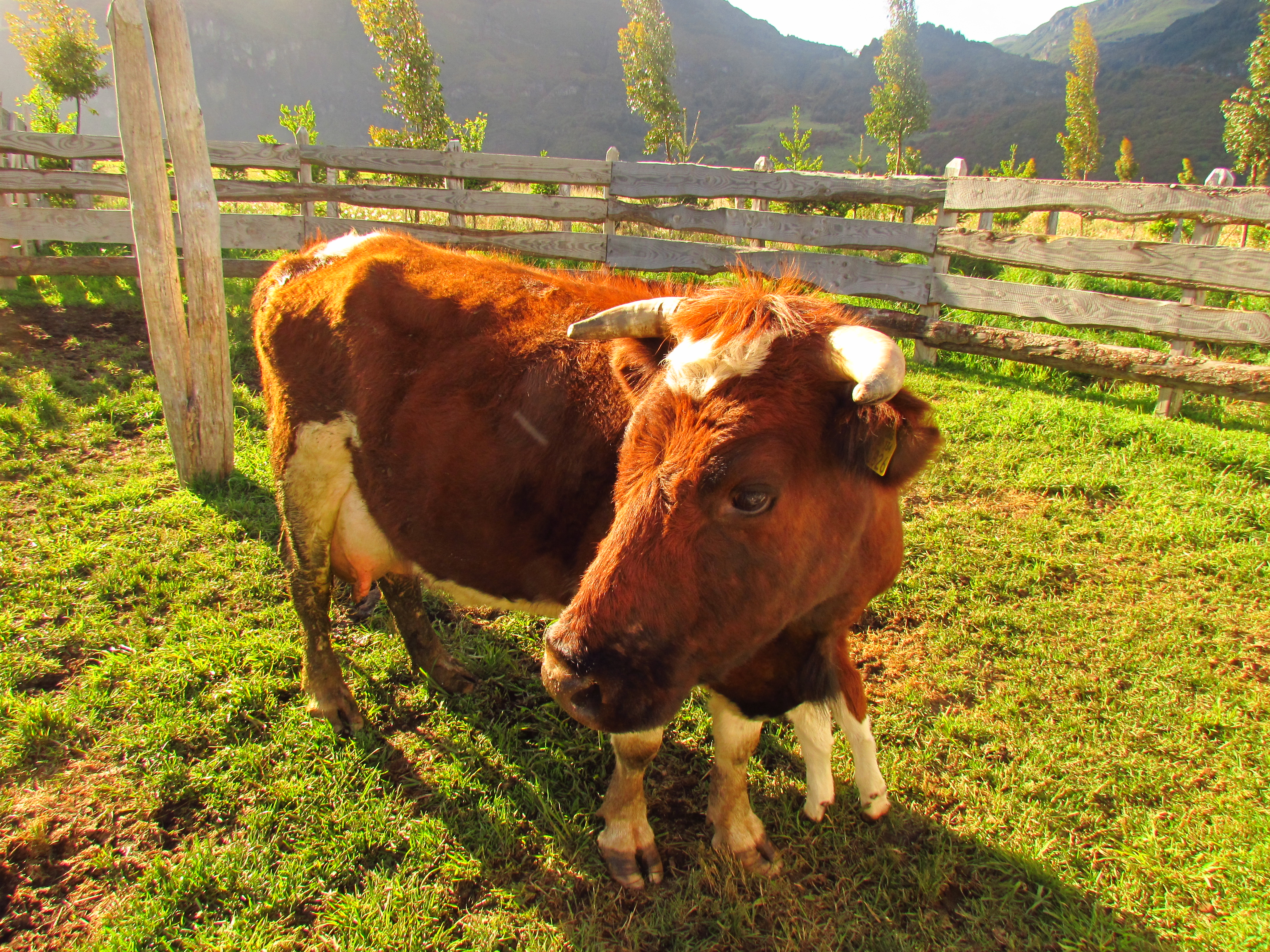
A dairy cow at Fundo La Pampita — livestock as part of the production system in Manihuales, Aysén.
The Fundo's dairy herd lives in paddocks alternating with corridors of native and introduced trees. This combination — the foundation of the agroforestry system we've developed at La Pampita — not only shelters the animals from the Patagonian wind, but creates habitat for the wildlife that inhabits the property. The pitío, a native woodpecker of southern Chile's forests, is one of the most frequent visitors.
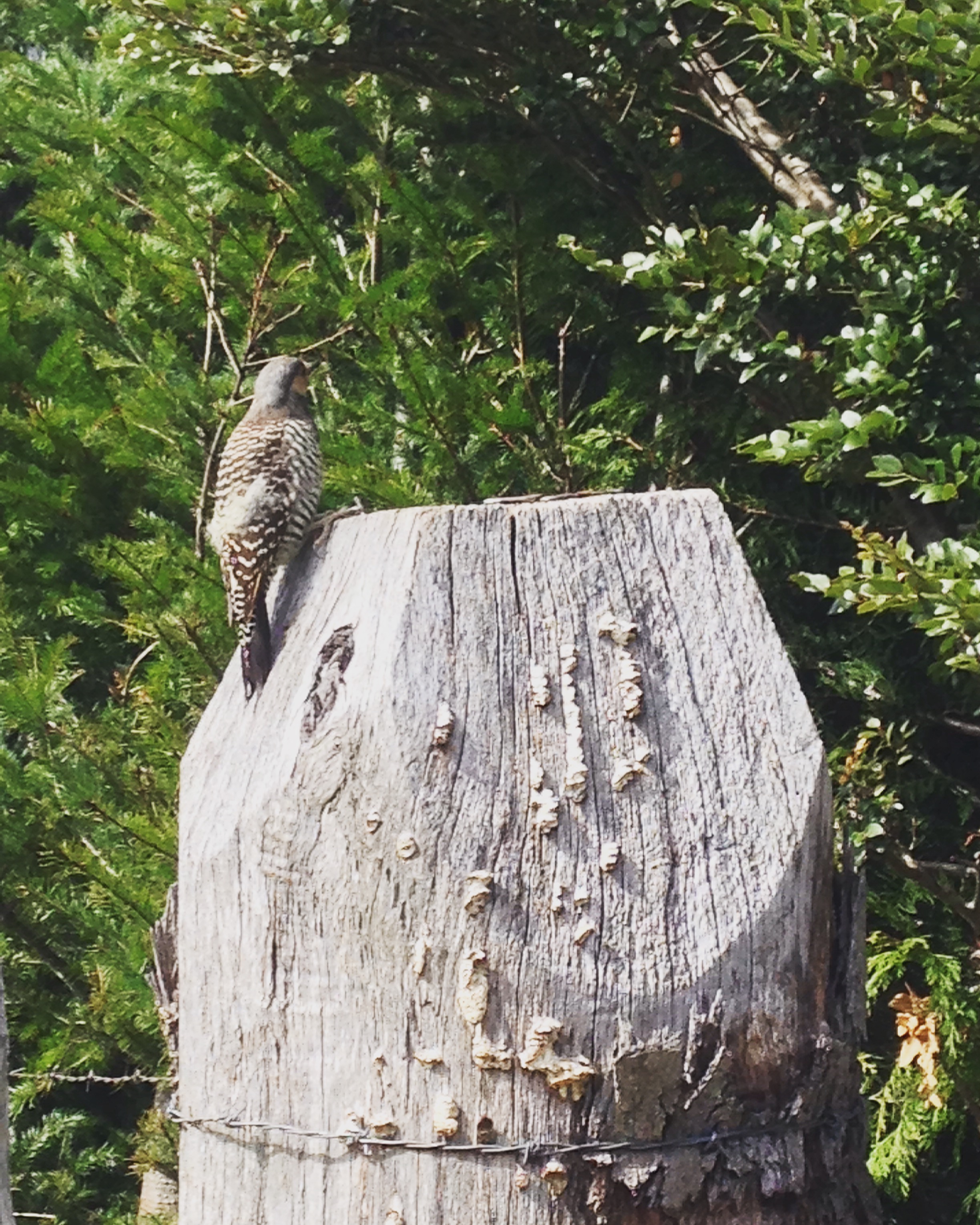
A pitío (Colaptes pitius) perched at Fundo La Pampita — an indicator bird of healthy native ecosystems in Chilean Patagonia.
Along the edges of the property, the Schwenkegaray family established and cultivated native Patagonian species: calafate (Berberis microphylla), the iconic Patagonian shrub with intensely flavoured blue-black berries, and zarzaparrilla (Ribes magellanicum), with its clusters of red berries that ripen in summer. Both were incorporated with care and patience as part of the property's design. Both are part of the multifloral pasture that feeds our bee colonies and gives Productos La Baguala honey its distinctive character.
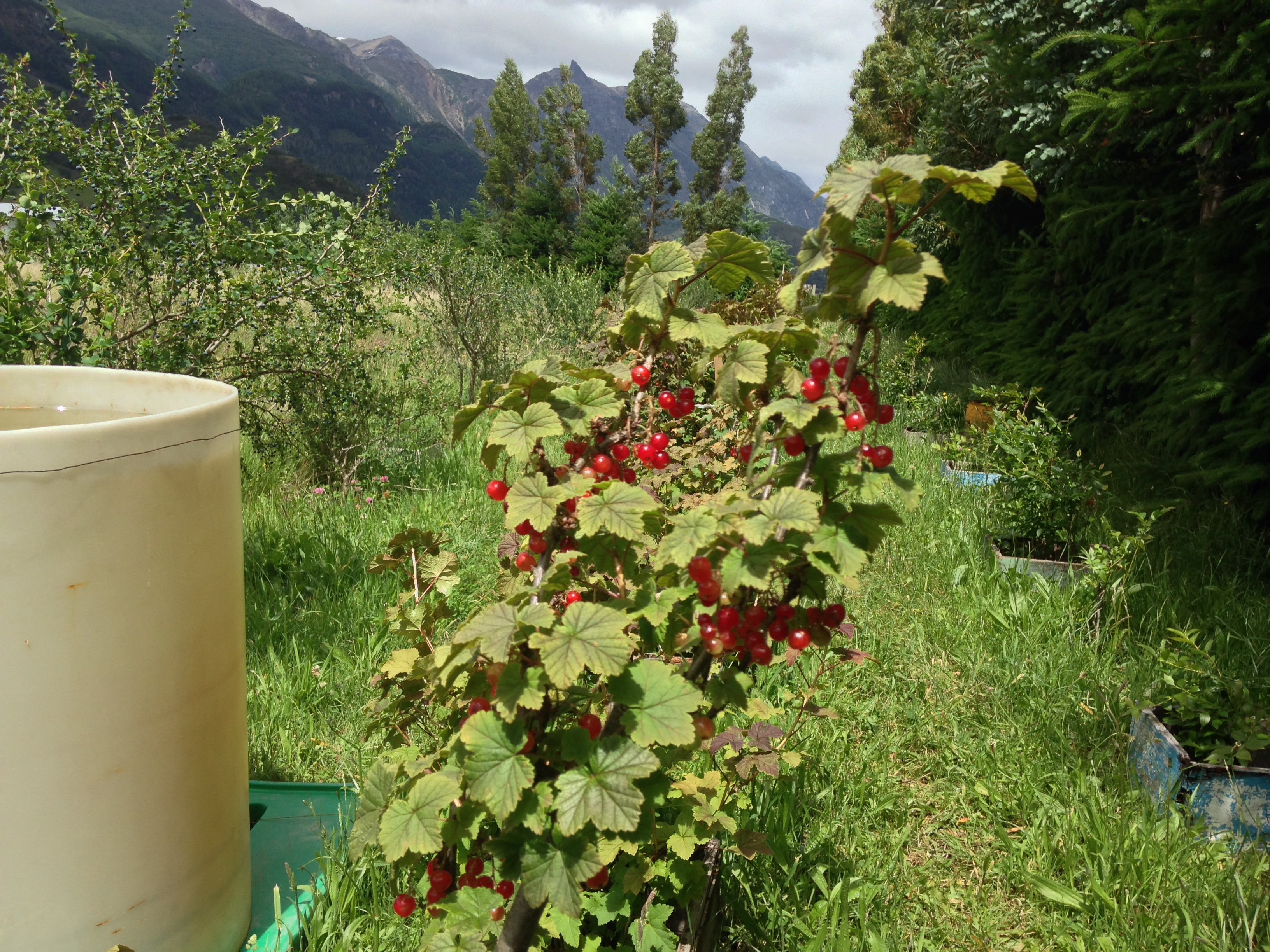
Patagonian zarzaparrilla in full fruit — incorporated and cultivated along the edges of Fundo La Pampita, Manihuales.
The biodiversity at Fundo La Pampita is not a decorative add-on: it's part of what makes the production system possible. The native forest, the shrubs, the birds and the insects form a network that sustains the pasture, pollinates the crops and keeps the soil healthy. If you're interested in seeing up close how this balance works in Chilean Patagonia, write to us to coordinate a visit. We're in Manihuales, Aysén Region, 65 km north of Coyhaique along the Carretera Austral.