Some winters leave a mark. At Fundo La Pampita, in the Mañihuales valley, the cold season arrived in full: frost before dawn, water freezing in the troughs and, in the harshest years, snowfalls that covered the paddock white for days. These photos are from 2015 and 2017 — two winters that are still remembered.
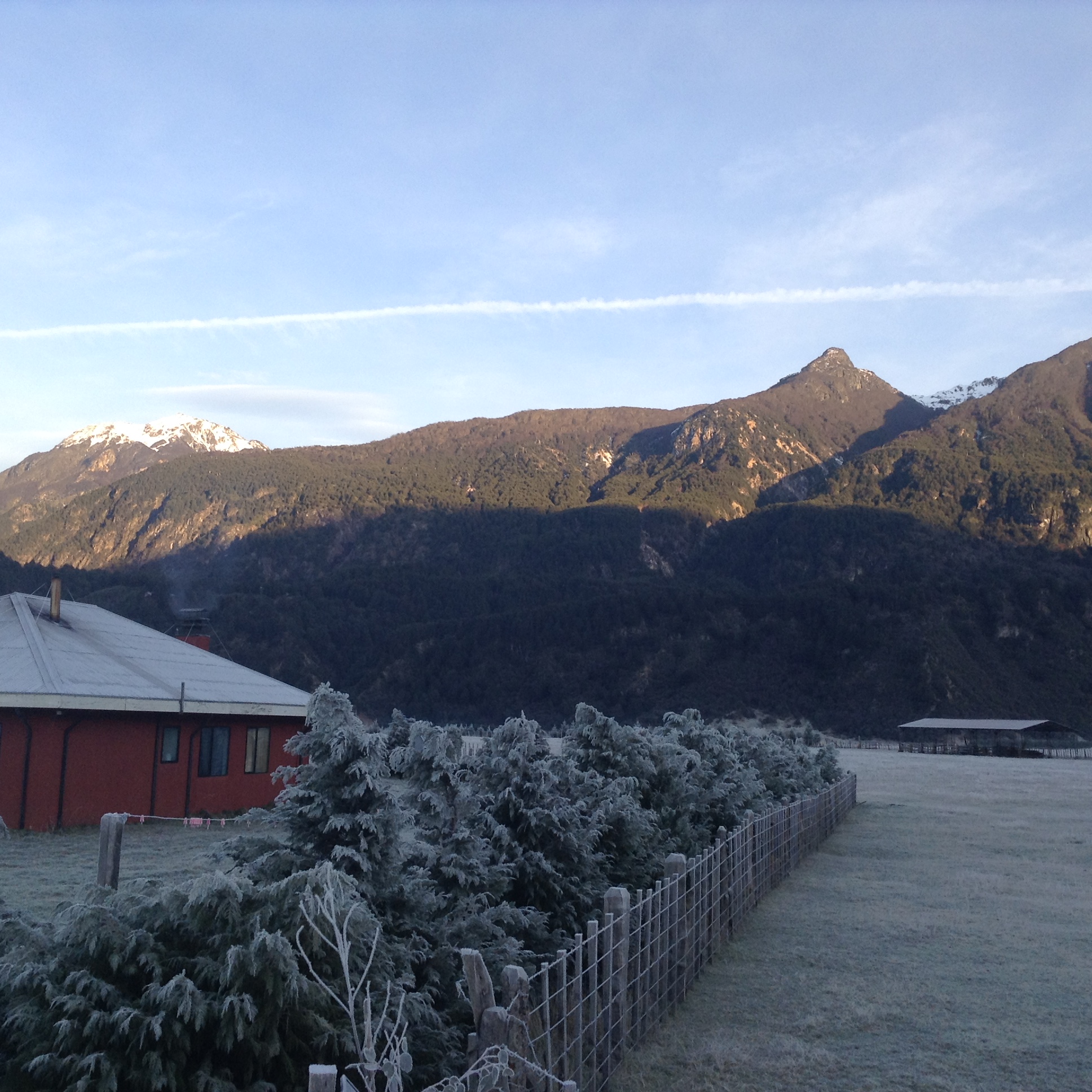
Winter dawn at Fundo La Pampita, 2015. Frost covers the garden and the hills are still in shadow.
The winter of 2015 arrived with persistent frosts. The grass white from early morning, the house covered in frost, the sun rising late behind the hills. On those mornings the work doesn't stop: the animals need water, the hives have to be checked, the Fundo keeps its rhythm even when the thermometer reads several degrees below zero.
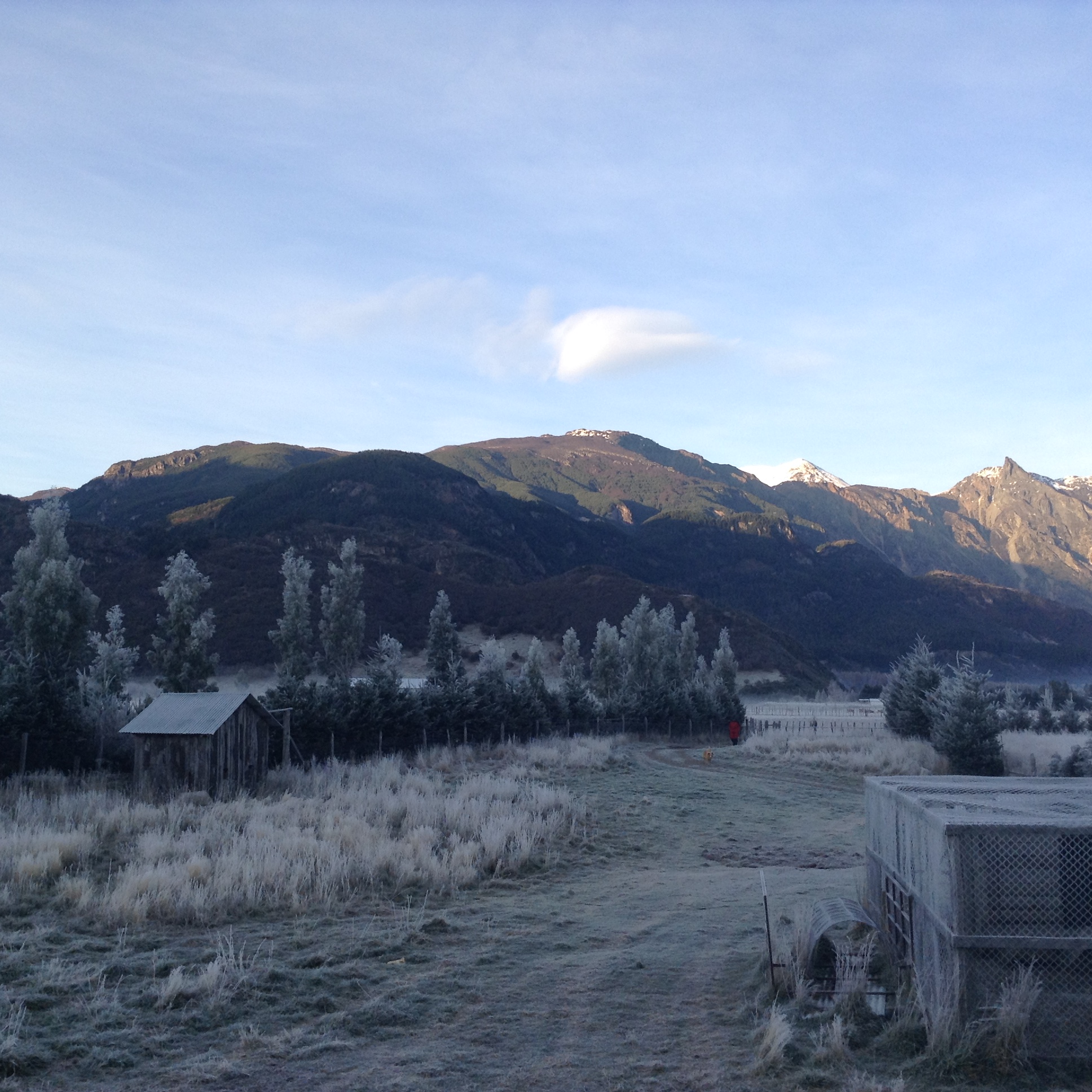
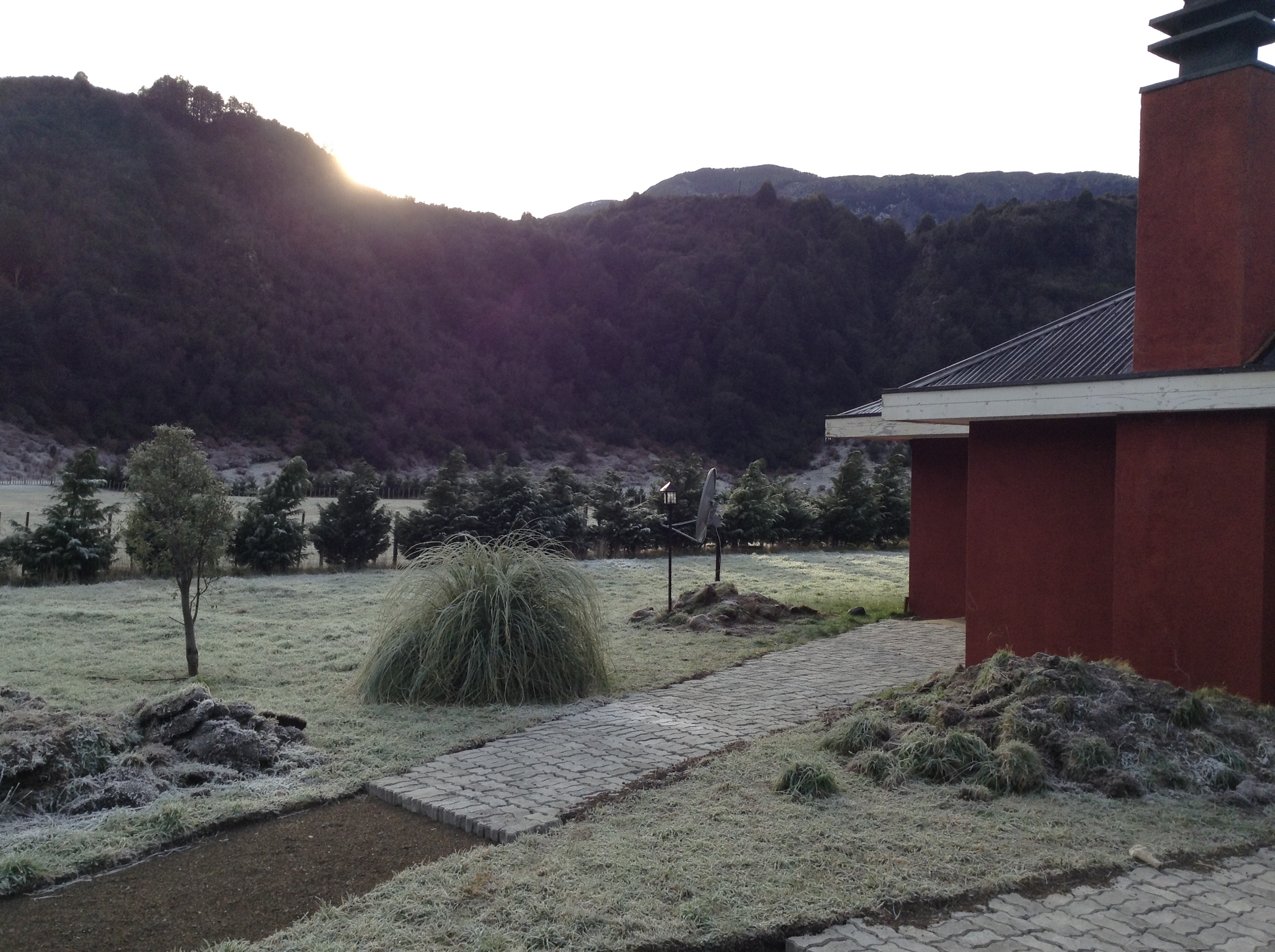
Around the house in the winter of 2015. The windbreak corridors, still young, in the background of the property.
June 2017 was something else. Real snow arrived, and in quantity: the paddocks were buried and the windbreak corridors — still young at the time — barely poked through the white blanket. Working in those conditions has its own logic: move slowly, protect the animals, make sure structures hold the weight. The Fundo in winter demands constant presence and judgment. Those winters, with all their harshness, also had something that made them memorable: the silence, the clarity of the sky after the storm, the property turned into something that feels both foreign and familiar at once. In Aysén, snowfalls like that are less frequent today. When they come, the Fundo returns to a state that's hard to forget.
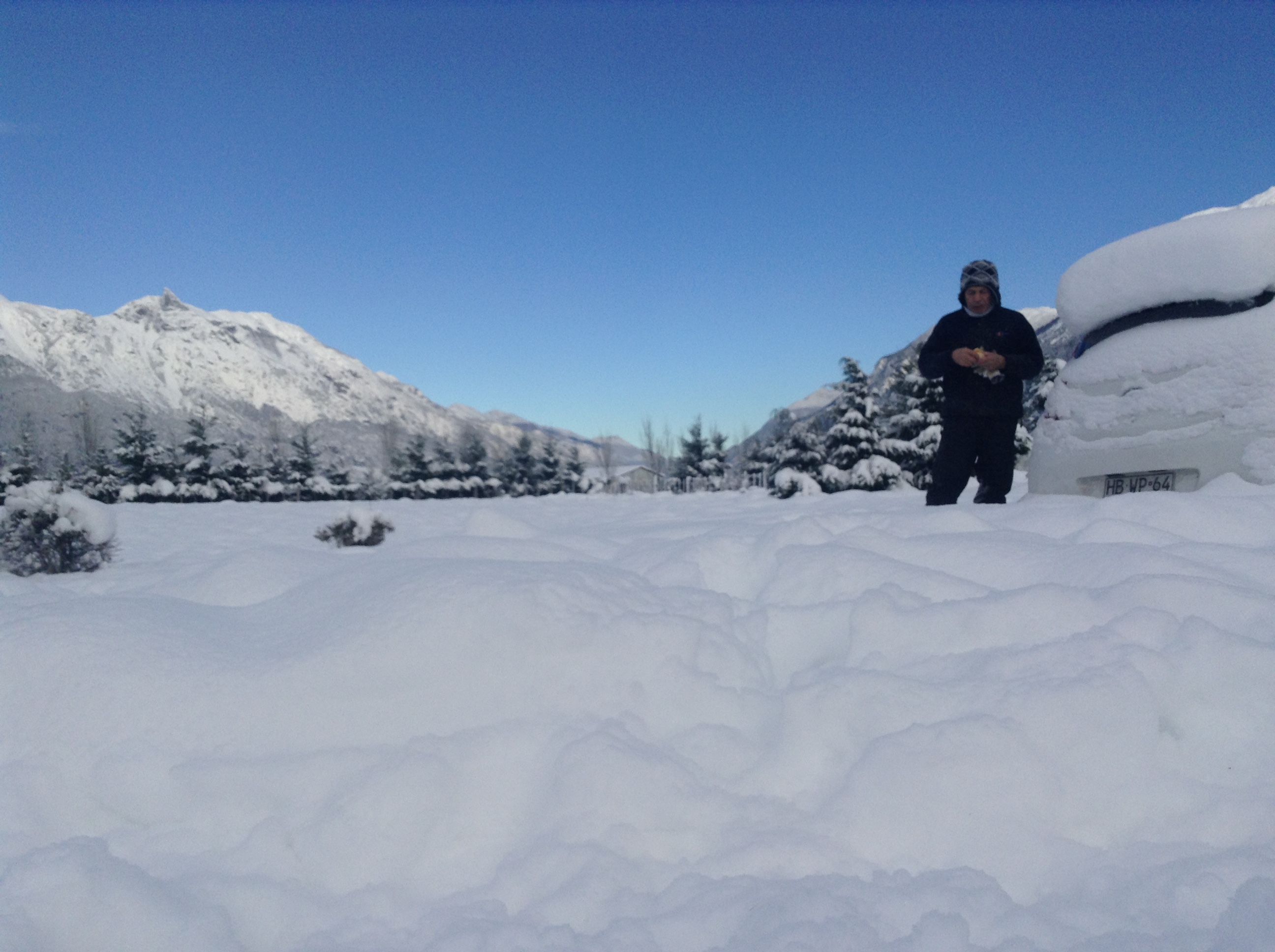
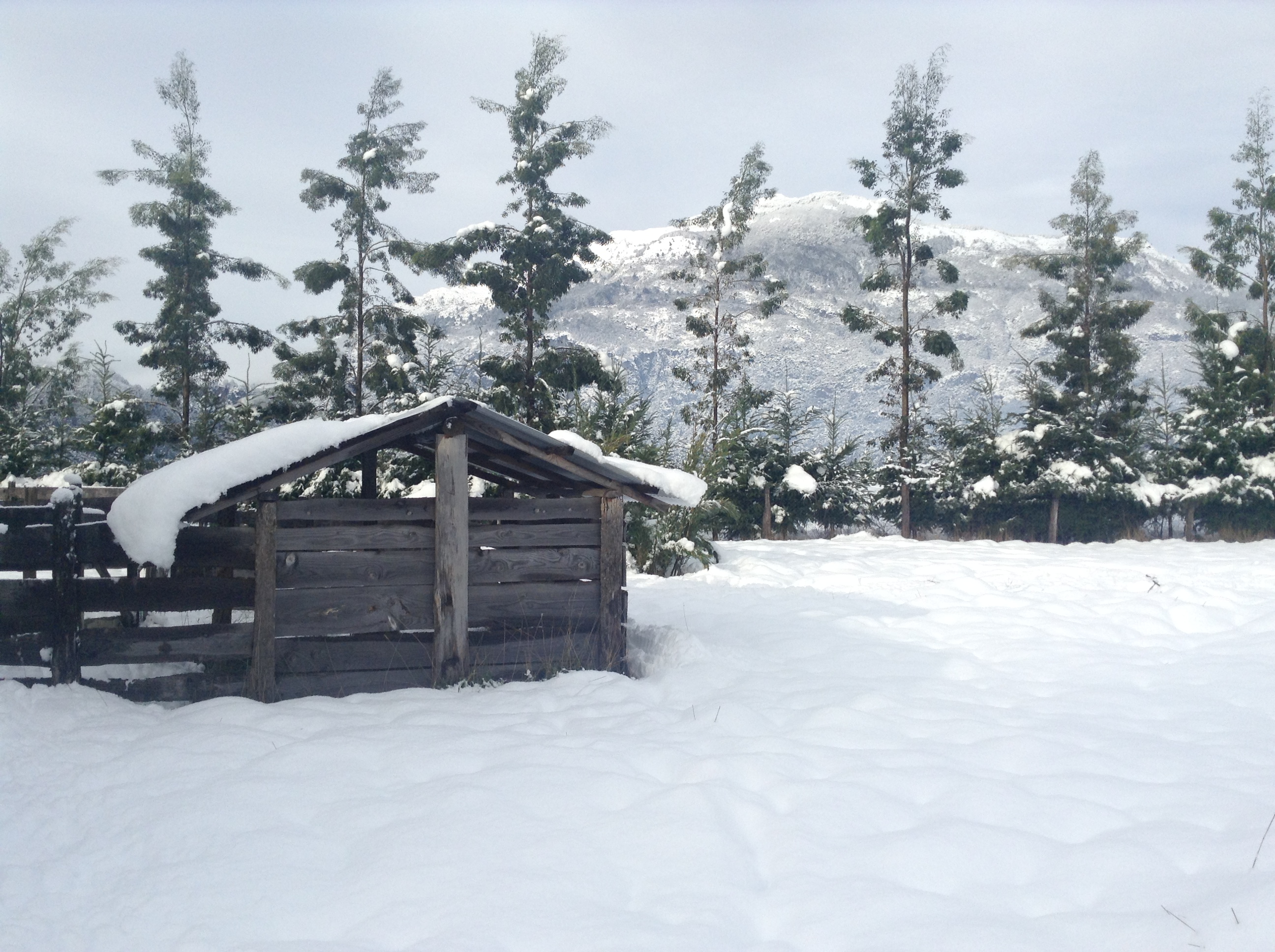
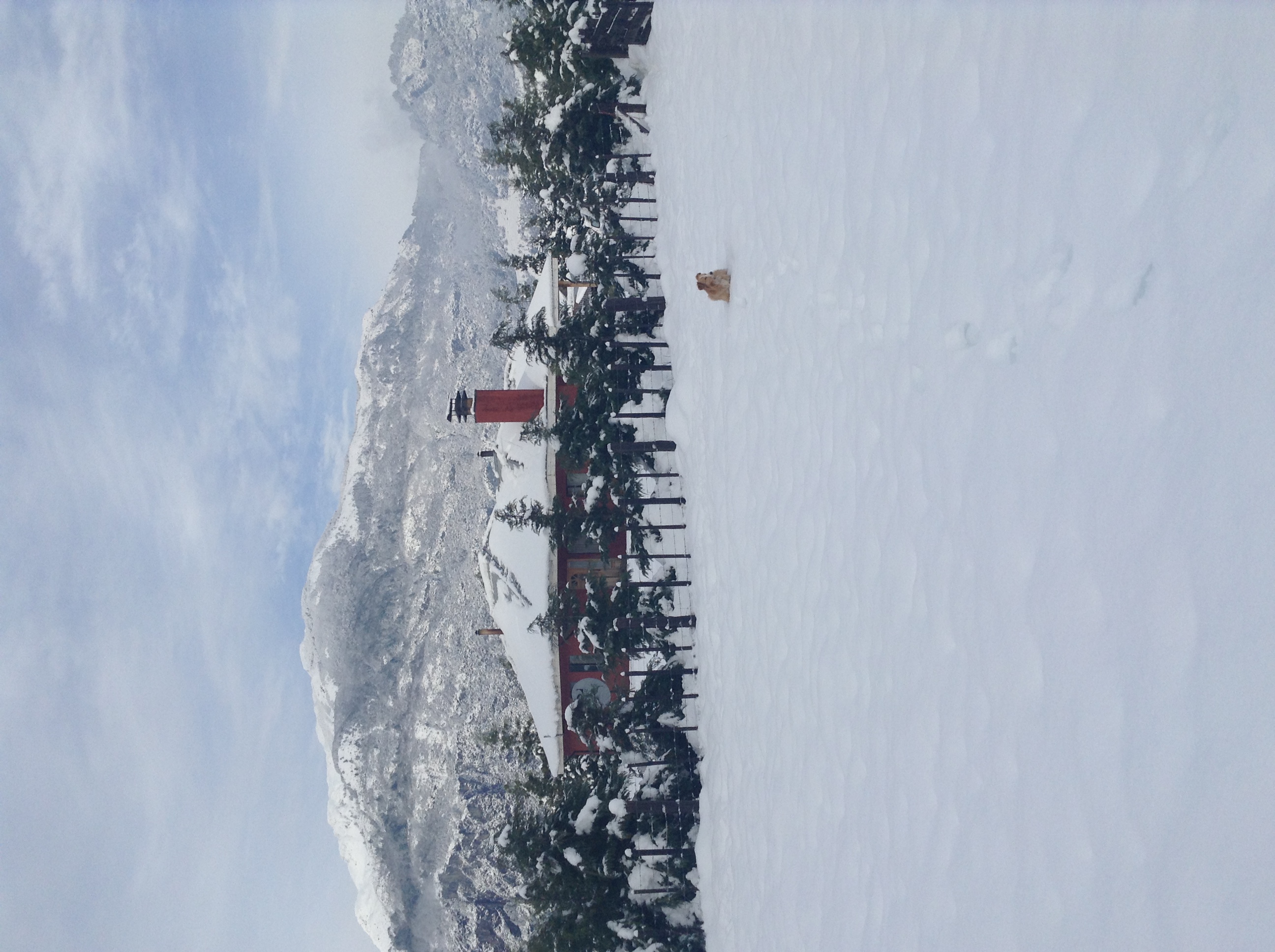
June 2017. Snow buries the paddock and the first corridors of Fundo La Pampita's agroforestry system.