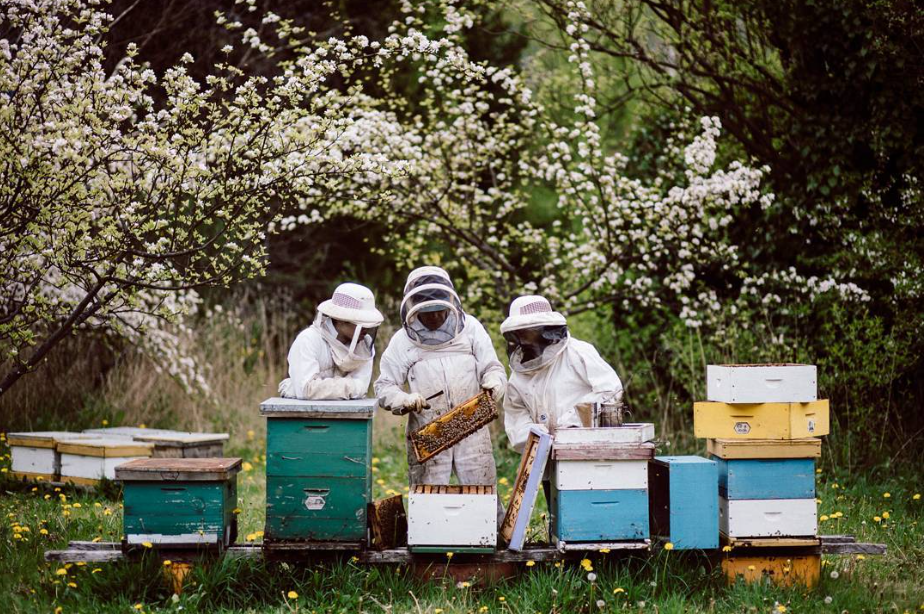
At Fundo La Pampita, winter arrives with clarity: the sky turns white before dawn and the grass crunches under your boots. This is when the hives enter their period of lowest activity, but that doesn't mean the beekeeper rests. This June, as every year, we checked the state of each hive before the cold fully set in.
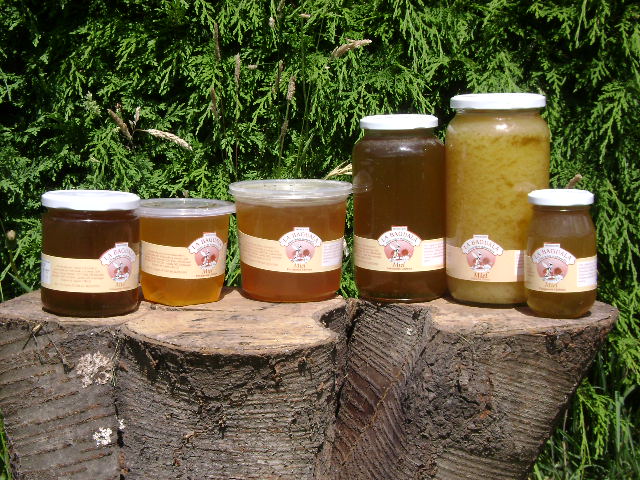
Fundo La Pampita is the Schwenkegaray family's land, located in the pre-cordillera of the Aysén Region. Beekeeping here is a private practice of our father, who has kept his hives within the native Patagonian forest for decades. The honey produced is sold under the Productos La Baguala brand.
The bees have reduced their flight to a minimum and cluster at the center of the comb to retain heat, forming the compact mass beekeepers call the winter cluster. The colony does not hibernate like other insects: the bees stay active inside, vibrating their flight muscles to generate heat and concentrating it at the center of the cluster, where the queen is. A well-prepared hive maintains between 20 and 35°C at its core even when it's several degrees below freezing outside.
Winter work: preventive, not passive
Winter work in beekeeping is mostly preventive. We check that each hive has enough honey reserves — at least eight to twelve kilos — for the colony to survive until the September bloom. In Aysén, where winters can stretch well into October, this reserve is the difference between a strong hive and one that doesn't make it to spring.
Winter is also when we prepare the equipment for the next season. We check and organize the gear, assess the condition of the supers and frames, and get the apiary infrastructure ready for when spring arrives. At the same time, we check the weight of each hive to estimate its reserves and determine whether any colony needs supplemental feeding before the cold deepens. In Aysén, a poorly prepared colony in June rarely reaches September strong.
The pasture waiting in spring
What makes beekeeping at Fundo La Pampita special is the plant diversity surrounding the property: a multifloral pasture with native species and introduced varieties of high ecological value that will feed our bees in spring, giving the honey that floral, complex flavour that characterizes it.
The Aysén pre-cordillera offers a sequence of blooms running from September to March: chilco opens first along the stream edges, followed by ciruelillo in November, lighting up the forest in red-orange, and in midsummer thistle and vigorera take over the paddocks. For now everything sleeps under the frost, but the preparation begins now.
We are already preparing materials for next season: new stamped wax frames, clean honey supers and inspection of the mouse guard that protects the hive entrance during the cold months. When the summer bloom arrives in January, the hives will be ready to work at full capacity.
Beekeeping is a private family practice, not a service we offer to third parties. But you can visit the apiaries as part of an experience at Fundo La Pampita.
See experiences at the Fundo →