At Fundo La Pampita we've spent more than a decade documenting the farm from above. The first time was in 2014: we climbed the hill that rises at the far end of the valley and pointed an ordinary camera downward, while the pre-cordillera wind shook the frame. Back then the agroforestry system was just taking shape — freshly marked-out paddocks, young windbreak corridors, and the main house as the only fixed point in the middle of the grass.
2014 · The first aerial photos
.JPG)
.JPG)
View from the hill over Fundo La Pampita, 2014 — Manihuales, Aysén Region.
From that height you could see what you can't from the paddock floor: the real scale of the property, the layout of the internal roads, and how much work was still ahead. Nothing that looks orderly today got that way on its own — every windbreak corridor, every fence and every corral was a decision made on the ground, years before there was even the idea of photographing it from above. That 2014 photo is, in a way, the starting point of the Fundo that exists today.
2016 · The system takes shape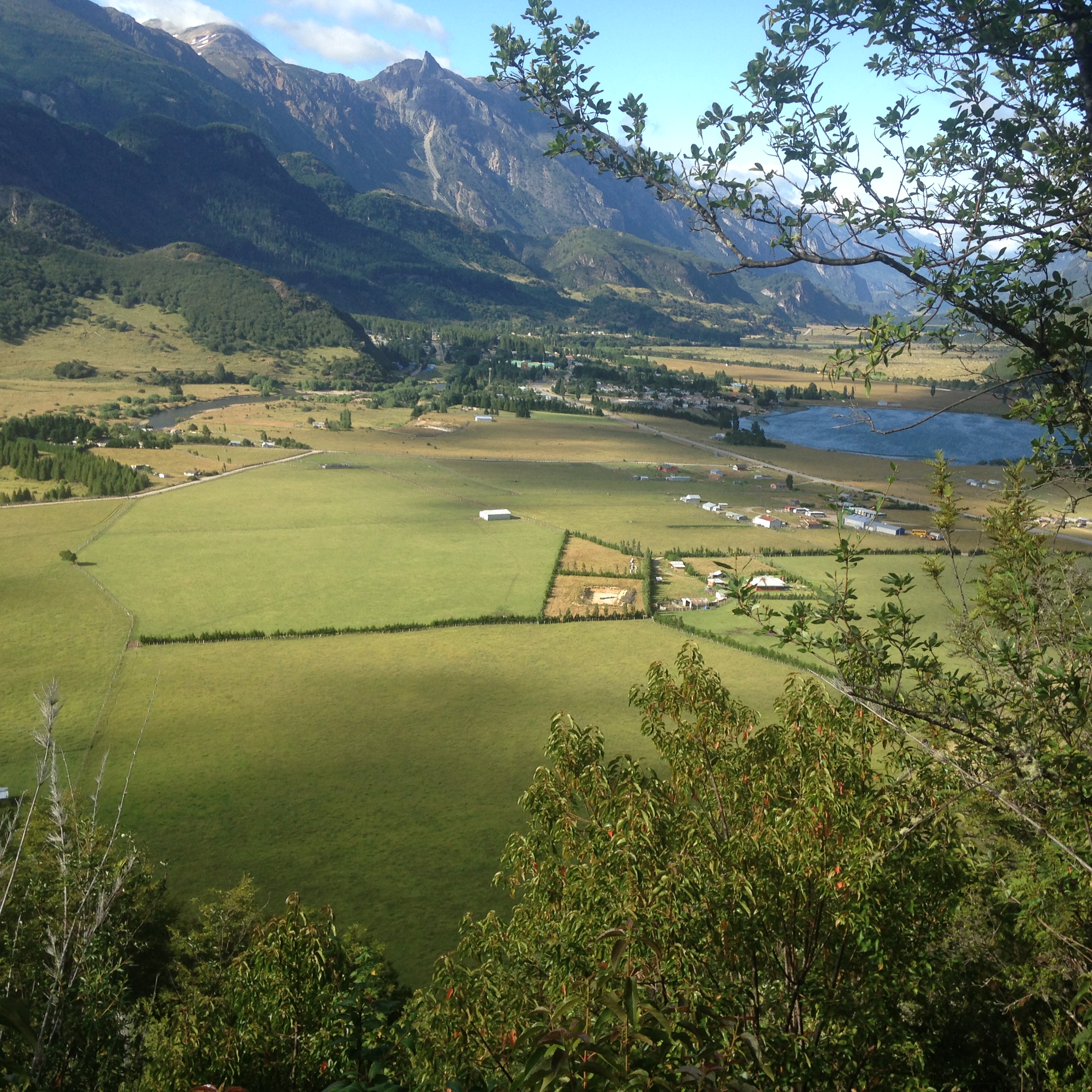
.JPG)
Fundo La Pampita in 2016 — windbreak corridors consolidated, greenhouse and infrastructure in place.
We went back up the same hill in 2016, and the change was obvious even from that distance. The rows of trees we planted as windbreak corridors already marked clear boundaries between the paddocks, a greenhouse had been added next to the house, and the animal corral sat neatly to one side. Two years of work on the ground read at a glance from the air — the same view we still use today, ten years later, to understand how the Fundo keeps changing.
Today · From the hillside to the drone
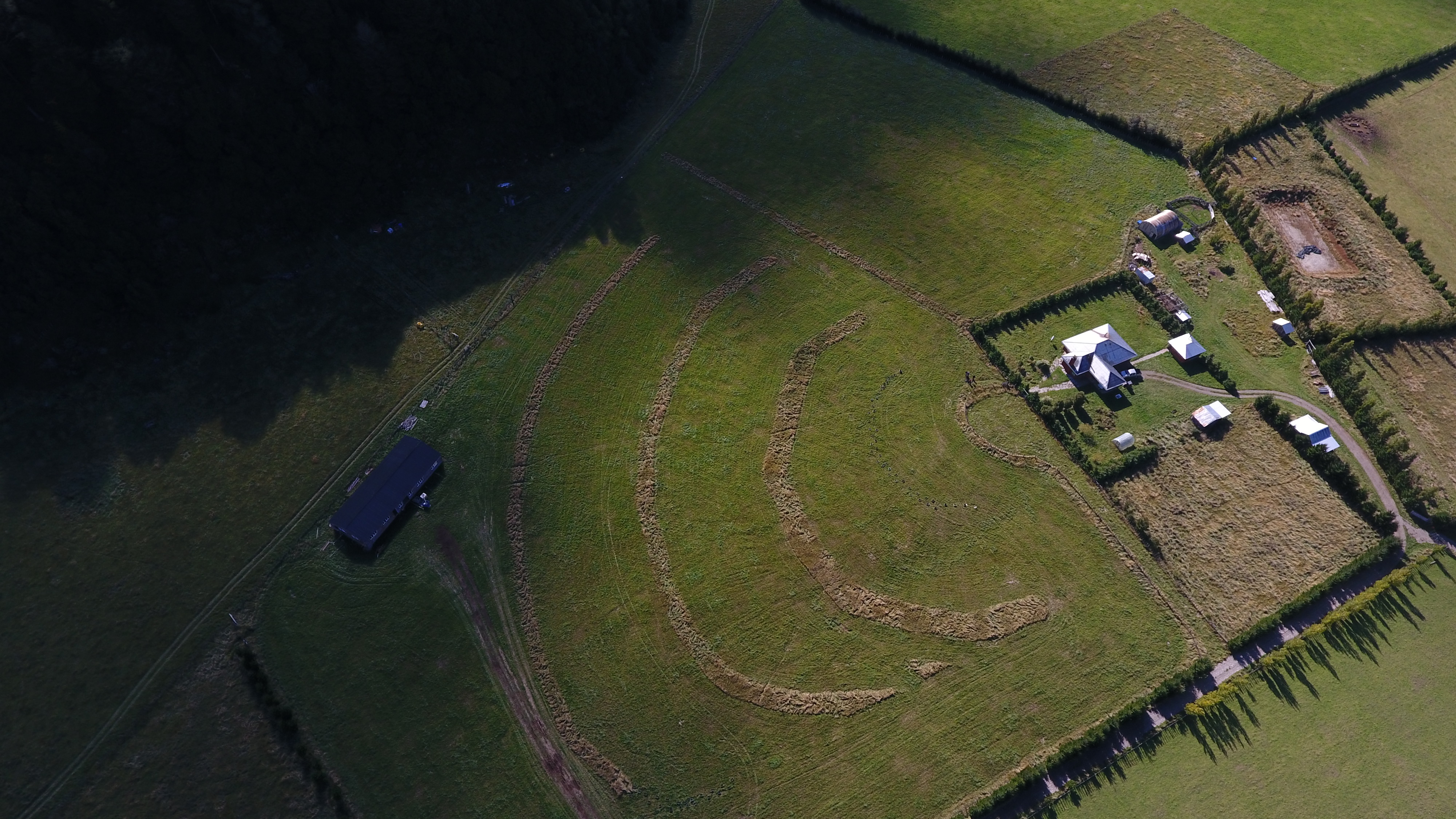
The Fundo seen with our own drone — the same view as always, with a new tool.
Today that view changed tools: we no longer climb the hill with an ordinary camera, we fly our own drone over the Fundo. The curved patterns you see in the grass are just part of normal paddock management, and from the air you understand in a second what takes a full walk to grasp on the ground. We'll keep documenting the Fundo this way, season after season — and if you'd rather see it in person than only in photos, you can experience it as part of a visit to the Fundo.