There is a kind of farm work that yields no results in the same season it is done. Planting trees in Patagonia is exactly that: you work in the cold, with freshly turned soil and plants that seem too small for the landscape surrounding them, and the results arrive years later. At Fundo La Pampita, in Mañihuales, Aysén Region, that work began decades ago and continues today. These photos show part of a process that rarely appears in the finished image of an established farm.
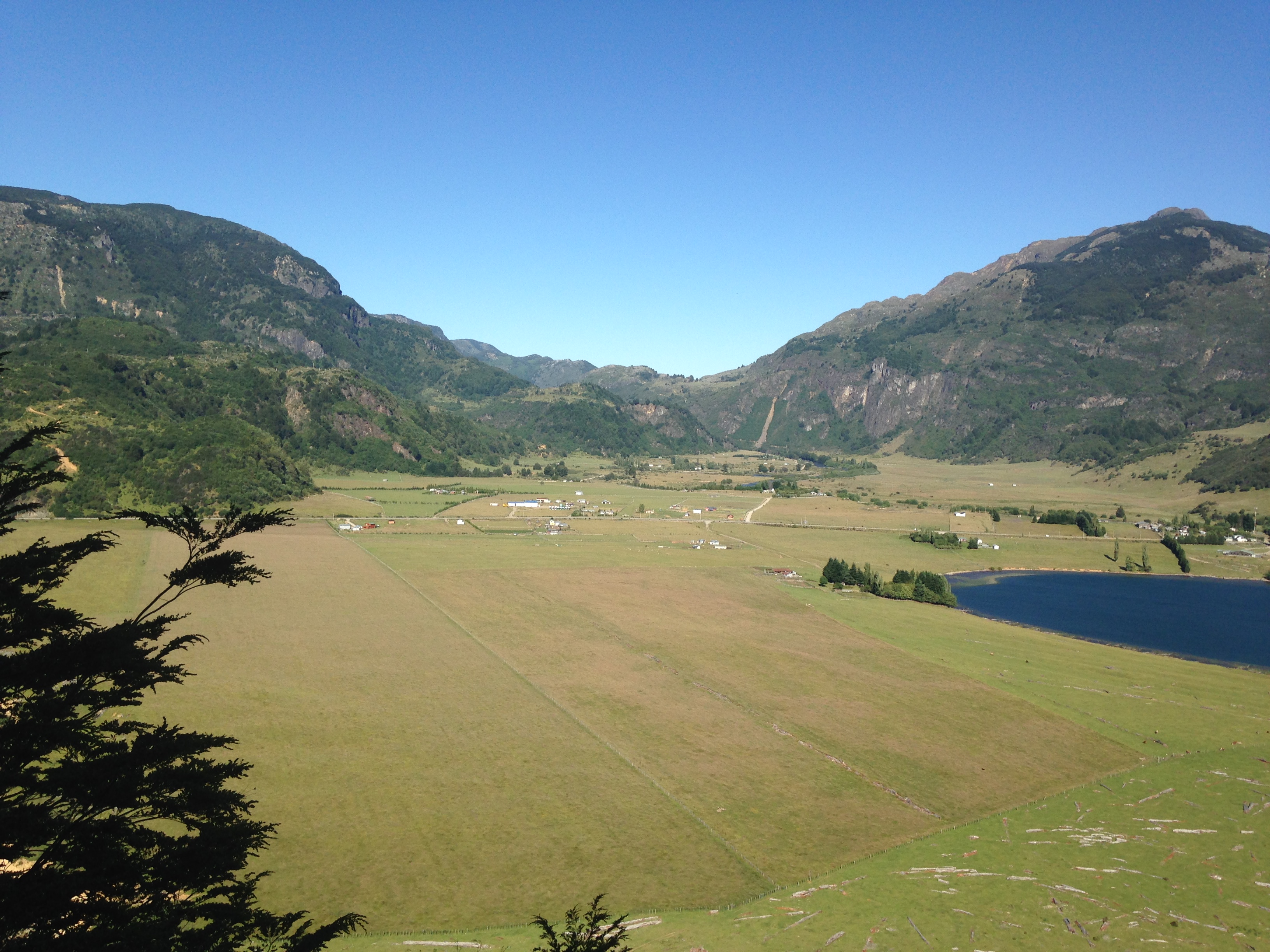
The Mañihuales valley from above — Fundo La Pampita at the centre, framed by the Aysén cordillera and a lagoon to the right.
This view from the hill helps to understand the scale. Fundo La Pampita occupies a strip of the Mañihuales river valley, wedged between mountains descending from the Patagonian cordillera. That same imposing landscape is also the source of the wind: cold air systems that sweep down from the ridges and scour the open pastures with a constancy that every producer in the area knows well. Planting windbreaks in that context is not an aesthetic decision — it is a technical response to the real conditions of the territory.
2016 — Full planting season
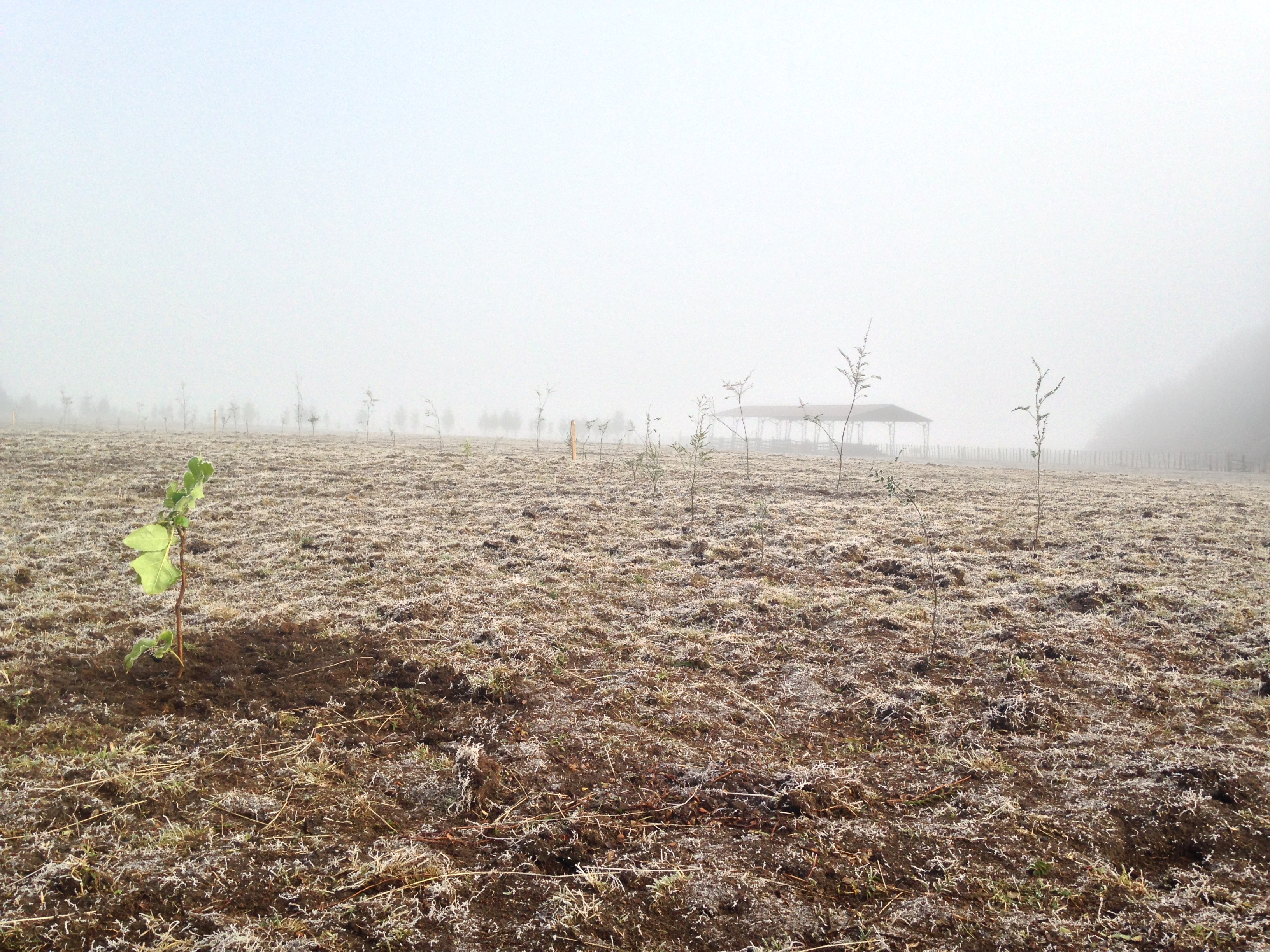
Early spring 2016 — freshly planted trees with frost on the ground. In the background, the shed structure emerges from the mist.
This photo is from early spring, when there is still frost on the mornings. That is when much of the planting takes place: the soil is moist from winter, the trees are dormant, and the night frosts are no longer severe enough to kill freshly established plants. Every tree was placed by hand, at distances defined by the system's design. What you see in the image — rows of plants barely taller than a metre — will take several years to become the windbreak structure that today protects the farm's pastures.
.JPG)
Maintenance work among the young trees — the farm house and the snowcapped peaks of the Aysén cordillera in the background.
Planting is only the first step. The early years of a windbreak require constant upkeep: weeding, irrigation during dry summers, and checking the stakes that keep the more exposed trees growing straight. This image shows the everyday work among young plants — trees that are still fragile but already showing the first leaves of the season. In the background, the snow-covered cordillera provides the frame that accompanies all farm work in deep Patagonia: you always operate within that landscape, never above it.
The farm seen from the surrounding hills
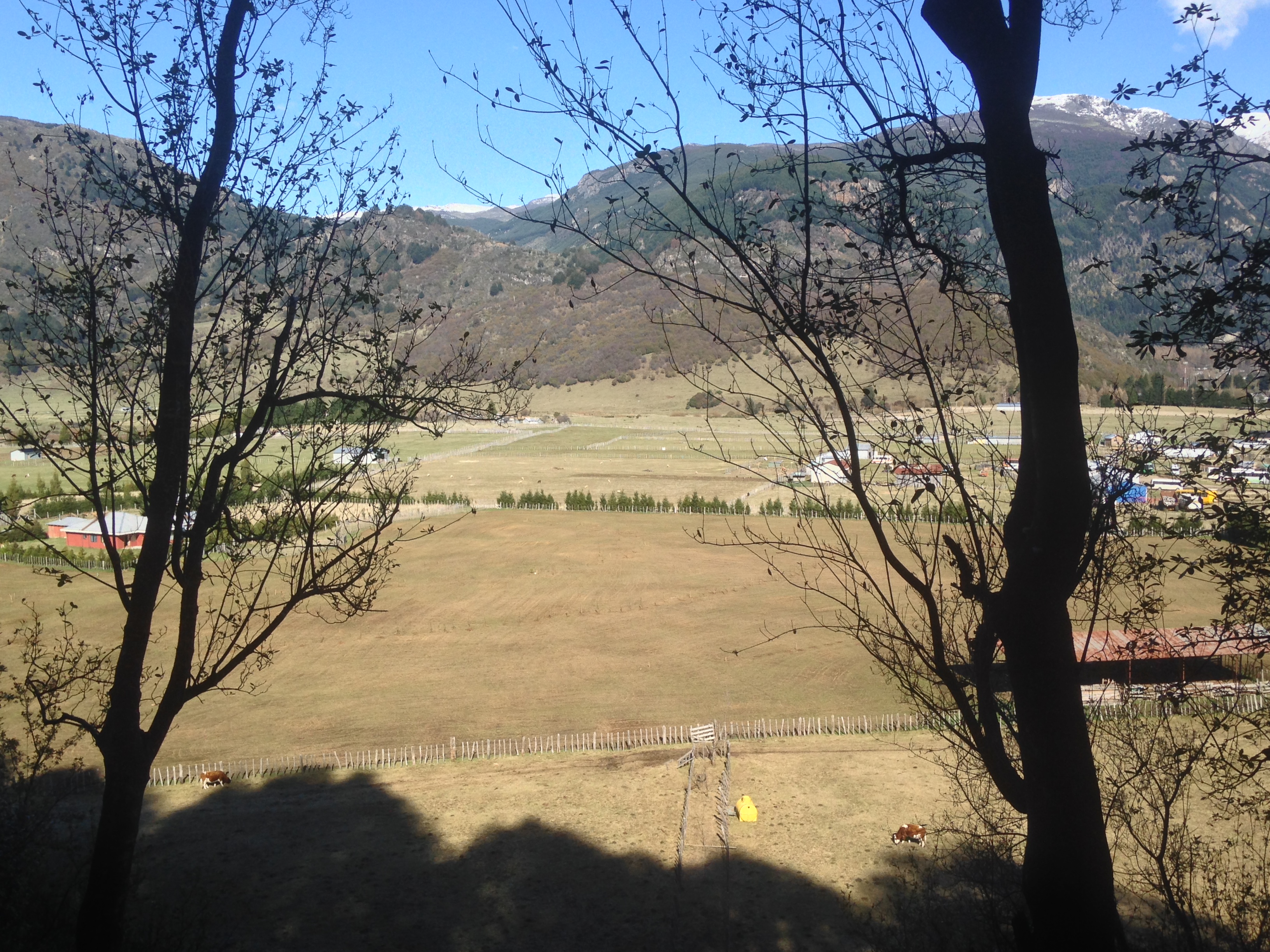
View from the hill adjacent to the farm — the windbreaks already visible as green lines between the pastures, autumn 2016.
From the hill you can see the system's progress with perspective. The rows of trees that were once barely visible in the pasture begin to read in the landscape as real structures: green bands dividing the fields, marking the accumulated work of previous seasons. This photo also shows something that cannot be appreciated equally from inside the farm: the relationship between the property and the valley, the way Fundo La Pampita occupies its place in Mañihuales, Aysén Region.
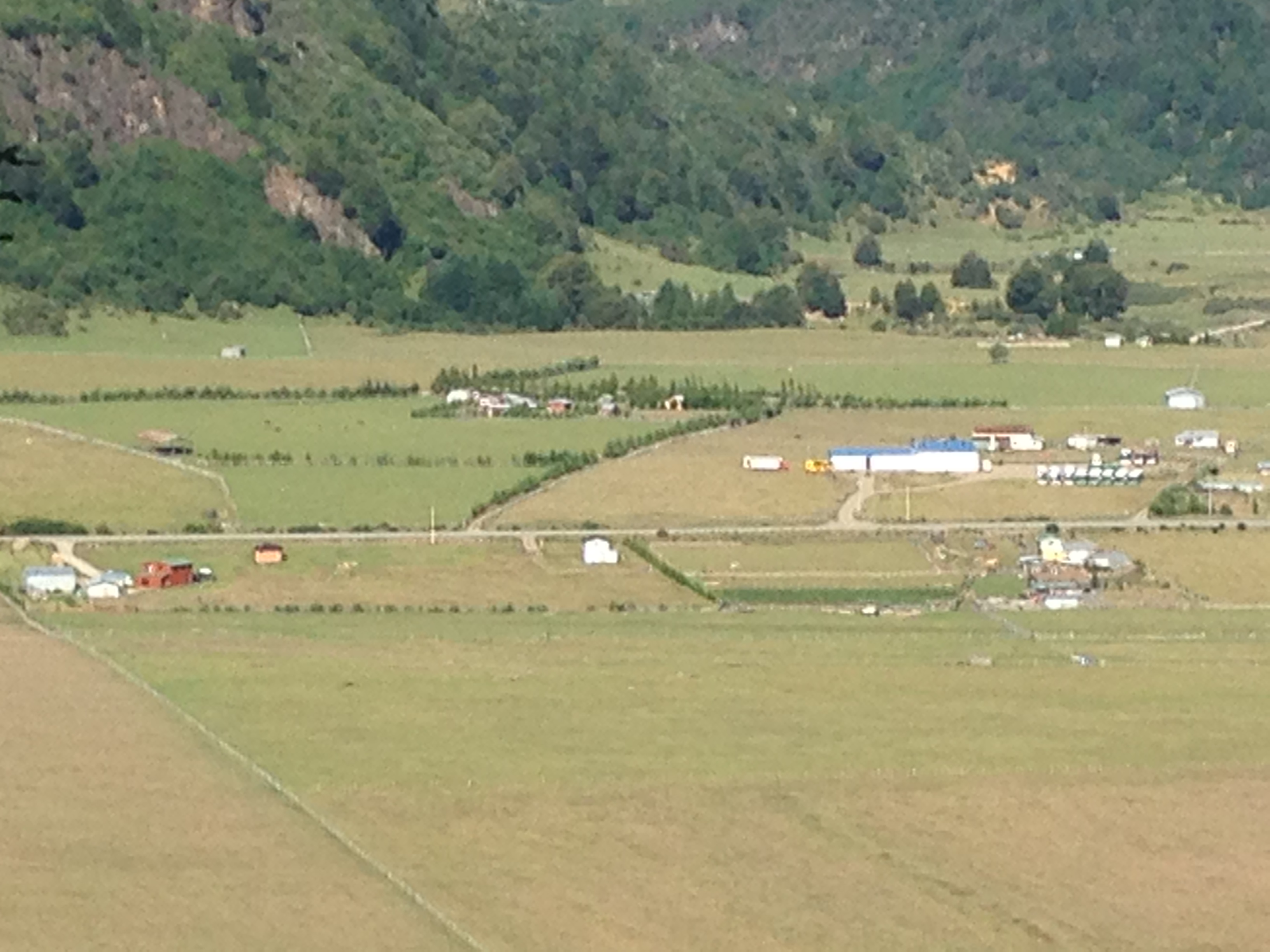
Fundo La Pampita from another aerial angle — the Carretera Austral cutting across, established windbreaks and farm installations, 2016.
This aerial view shows the complete layout of the system: windbreaks tracing parallel lines between the pastures, the Carretera Austral cutting through the terrain, and the farm's installations organised at the centre of the property. What at ground level is experienced as fragmented work — one tree, one row, one season — from above has a clear collective logic. The agrosilvopastoral system at Fundo La Pampita was not designed to look good from the air, but the air shows it for what it is: a territory worked with judgement and with time.
If you would like to visit Fundo La Pampita in person — to see how the windbreak system, the pastures and the livestock work in real Patagonia — write to us to arrange a visit. You can also read our earlier entry on the history of the windbreaks, which traces the system's evolution from 2013 to the present.
Interested in visiting Fundo La Pampita?
We coordinate private visits to the farm and the agrosilvopastoral system in Mañihuales, Aysén Region. Write to us and we'll put together a proposal for your group.
Contact us