The windbreak corridors are one of the most visible — and most patient — investments we've made at Fundo La Pampita over the years. Planted along contour lines following the terrain's topography, these rows of trees protect the paddocks from the southern winds that come down from the Patagonian cordillera. In Aysén, wind is not a decorative element: it can affect animal welfare and radically change working conditions in the field. Having functioning corridors is part of what makes production possible at these latitudes.
2013 — The early years
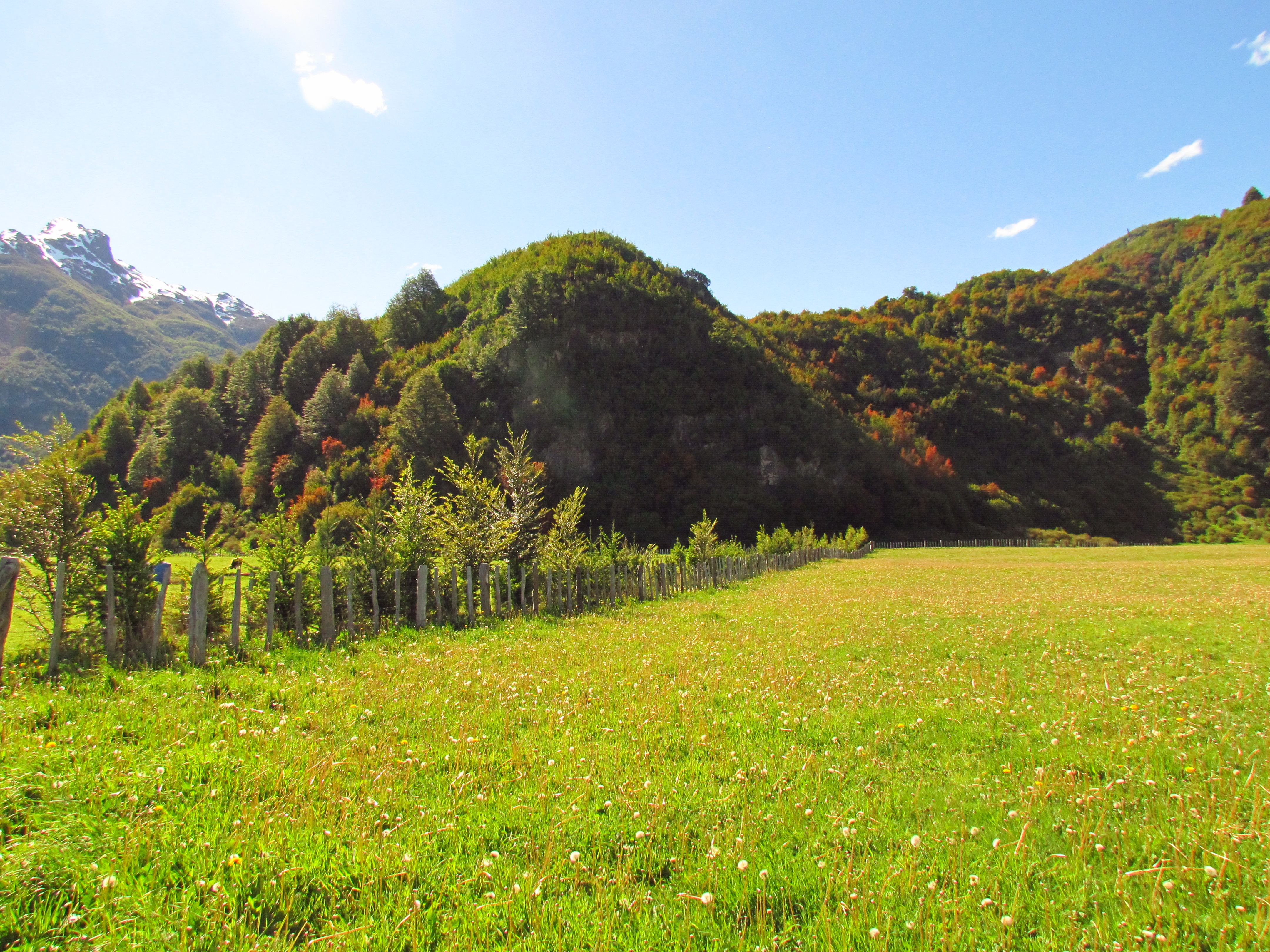
November 2013 — the corridors in their early years, with Aysén's native forest in the background.
In the early years, the corridors were rows of plants that looked small against the scale of the landscape. Each tree was planted by hand, in autumn and winter, in the cold and rainy conditions typical of Chilean Patagonia. What looks today like a robust vegetation structure began as a long-term bet: a set of stakes and young plants that needed time, water and constant care to take hold in soil that can be demanding in Manihuales.
2014 — The system takes shape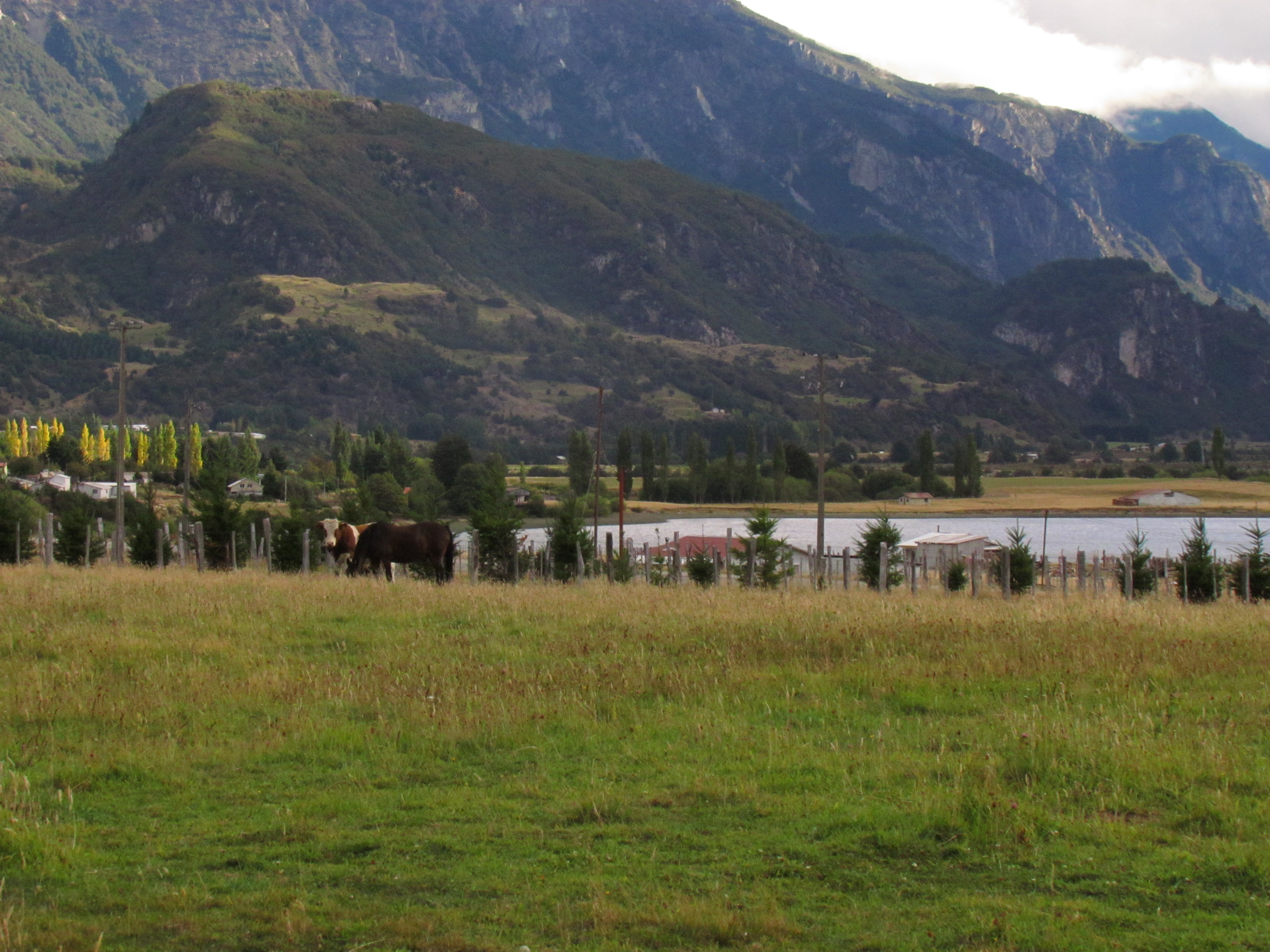
2014 — paddocks and corridors along the Carretera Austral, with the lagoon and the Aysén cordillera in the background.
After a couple of years, the paddocks began to show the effect of the corridors. Animals started seeking shelter in the protected areas, pastures retained moisture better in summer, and field work became less harsh. The agroforestry system we developed at Fundo La Pampita integrates trees, pasture and livestock in the same space: the corridors don't just cut the wind — over time they improve the soil, create microhabitats for native wildlife and provide a source of timber and firewood.
2016 — Growth and expansion.JPG)
September 2016 — new rows planted in the system, with the snow-capped peaks of the Aysén cordillera in the background.
In 2016 we kept expanding the system. New sectors of the property added their own corridors, extending protection to paddocks that had previously been exposed. The image of young trees against snow-capped mountains captures well what planting in Patagonia means: working with the scale of the landscape, not against it. Every new row was a decision about the future, made knowing the results would only be visible the following season, or the one after that.
2021 — Current state
April 2021 — the established corridors, seen from the paddocks of Fundo La Pampita.
Today, the oldest corridors are tall enough to give shade in summer and shelter in winter to the Fundo's animals. They are the visible result of decades of quiet work in Manihuales, Aysén Region. If you're interested in seeing Fundo La Pampita's agroforestry system up close — how the forest, the pasture and the livestock come together in deep Patagonia — write to us to coordinate a visit.